I've switched to GitHub from Trac because of spam. Despite using Akismet and bayesian filters, on a small instance, there were still several spam tickets if you didn't require an account (for the details, https://vincent.bernat.ch/en/blog/2011-migrating-to-github). I am a bit amazed that Trac still exists and is maintained today.
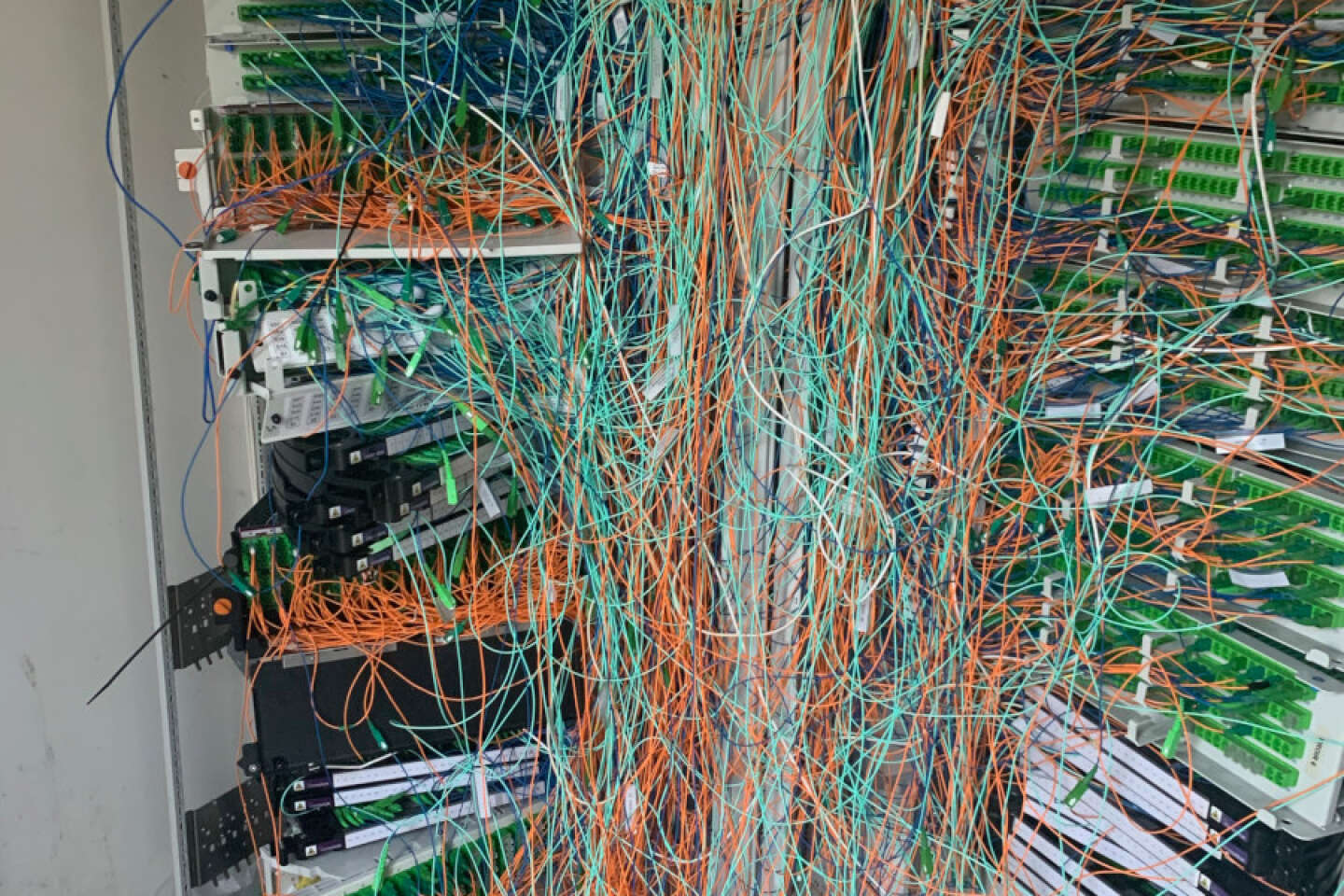
France has 90% FTTH coverage in 2025, with 60% of households over 1 Gbps. One of the incumbents, Free (my employer), deployed P2P fibers in very dense areas but is switching to P2MP for economic reasons (and because this was not a competitive advantage). It's unclear to me if Switzerland plans to achieve this coverage with P2P. What looks great in Switzerland is not that each household has four dedicated fibers to the CO, but that Swisscom has responsibility for these fibers. In France, we have competition between operators for both services and infrastructure. In very dense areas, each building can have its own infrastructure operator (with an obligation to share); in less dense areas, this is by district (with an obligation to share); and in rural areas, this is a subsidized network (with an obligation to share). The downside is that there are "mutualisation points" where each ISP can go to plug or unplug subscribers, and they become a mess (https://img.lemde.fr/2020/06/04/300/0/900/600/1440/960/60/0/...).
BTW, I am also disturbed by AI-generated images. The ones with the three workers laying cables look highly unrealistic and made me pause for a couple of minutes, wondering if they lay cables that way in Germany. The ones about how households are connected to CO look like you get multiple 720-fiber cables to the same household.
I’m curious as to how those numbers skew rural vs urban, as my experience in France couldn’t be further from fibre - have had a house there for decades, and we went straight from dialup to starlink, as there still isn’t even DSL available there. Fibre… don’t make me laugh.
It’s not like we’re super rural, either - small village, about 8km from two middling towns. The cell network isn’t much better - it’s 5g in the towns, and 2G or nothing as soon as you’re a few km out of them.
There is a fibre trunk running down the main road, 1.5km from the village, but when we enquired France telecom quoted about €250,000 to extend the fibre up to us. We passed.
Edit: same kinda deal with free.fr. If I check availability by address, it fails, as while the commune exists, the village does not, never mind the roads within it. If I enter the land line number, it says it is a mobile number and refuses to proceed.
So: your figures say 90%, but I suspect that’s a theoretical number rather than a real one.
Maybe it’s 90% of the 60% of addresses which got included in the statistics.
Edit edit: Ah hah, yes. I’ve looked at arcep’s methodology. That 90% is inventoried premises (homes & businesses) which:
- could be connected to FTTH, theoretically.
- exist in the arcep database
- are within several km of a live fibre
My home would be counted as “connected” by their methodology, even though there’s a quarter million euro bill to pay to make it so, and several km of fibre to run.
So - the stat is self-aggrandising bullshit, sorry.
Plus, the fiber trunk that runs near your house is not necessarily relevant. What matters are the _endpoints_ of that trunk line. They’re not just going to dig it up and splice your house into the middle of that fiber bundle. (This is a critical difference between fiber and water/sewer services!)
Instead there will need to be a central office (CO) in or near those towns that has a fiber trunk running to it. Then smaller fiber lines can be run from the CO outwards towards potential subscribers. The cheapest way to do this is with PON (passive optical networking) service, where a single fiber carries 10Gbps or 40Gbps service that can be split using prisms to service dozens of customers. XGSPON is 40Gbps, serves up to 128 customers, and has a maximum service distance of 16km. If you’re the first subscriber in that area, that €250k might be for opening up a whole new CO plus running a PON fiber bundle the whole 8km between it and your neighborhood.
Did you check on https://cartefibre.arcep.fr/? If your address is there, you will know the status of your address and notably the infrastructure operator, which has the obligation to cover your zone before 2030. If your address is not there (and the zone is empty, otherwise, this is up to your municipality to fix the missing address), it means there is no infrastructure operator yet. This is up to your local government to make a deal with an infrastructure operator to cover this zone.
As for the numbers, as it is open data, there are some sites like https://infofibre.fr/ where this is easier to see where we are. You can see that even rural regions have more than 90% of household coverage.
As for definitions, there are two cases for availability: immediate availability (infrastructure operator present up and you have at least one commercial operator after 3 months) or delayed availibility (the infrastructure operator has 6 months to make the address available after being asked by a commercial operator).
Just like every operator promises 95%+ national LTE/5G coverage (they have legal obligations in this regard), but somehow your particular village or town in the lower Alps or in Brittany has shitty data rates for some reason, despite the main street being coloured green on the official covergae map.
Some people in my family got a "zone blanche" subscription from SFR, i.e. LTE with a big antenna, possibly a higher Cat. than regular LTE, because they live too far from any DSL/fiber option.
We did actually try the LTE route years before starlink, but even on a honking great yagi the signal was unusable - the terrain is rolling forested hills and it apparently plays merry hell with diffraction and absorption of near-surface waves - at my place in Portugal we made an LTE relay up a hill work for us, as there the issue was just terrain blocking it directly, rather than it being heavily attenuated.
Anyway, I’ve looked at our address on the sites the OP provided - and it’s the first time our address has correctly existed as an individual property, rather than the whole village being marked as one - and it appears fibre became available about two months ago, which would make sense as I last checked the situation in December while there.
Anyway. I guess my point, that I utterly failed to make, is that there are many unserved places that don’t sit correctly in a database somewhere, or are just sparsely populated and inconvenient.
It is heavily dependent on the history of your area.
I am near Lyon (12km away), I had 20mb then 100Mb coaxial cable very early because the "département" built a public network and eventually leased it to private companies.
I finally switched to fiber 3 years ago when it became available in my street.
The cell network is fairly bad however (even with 2 cell towers less than 1km from my place).
I took the image to be showing how inefficient it was to run that much fiber three times instead of just once. It’s unlikely that they’d do it at the same time but it seems very difficult to show buried fiber and a backhoe ripping up the street.
In reality, this does not happen that way. If a path already exists, you can pay to use the same duct (unless it's full) to install your own fibers. At least, it works this way in France.
It absolutely does happen that way in Germany. We had Fiber Company A rip up the entire city a year ago, and Fiber Company B ripped up the streets again just a few weeks ago.
ETA from my ISP to actually get any of those lines into my apartment is still 2028.
This is a coördination problem: the municipality can mandate that every company has to install a larger conduit so that (say) 3-6 (?) other fibres can be run.
So if one company is doing the east part of the town, and another company is doing the west, at some point they could leverage the infrastructure of each other.
I don't think so. German open access law says if you're in a "market dominating" position, you have to share access to what you have. I'm at least unaware of a law that allows forcing telcos to build more than they want. (And even if there were, it'd be balanced by them deciding to just not build at all.)
I'm glad it works that way there. In the Netherlands, I've never seen a fiber duct laid in residential areas, it seems just plain fiber cables are buried.
Worse, two companies are chasing each other, so you have the ground being opened, closed, and within half a year the other company does the same. Even worse, they let the fiber cables stick out of the ground until the house subscribes to them, so a lot of houses have 1 or 2 ugly orange cables sticking out of the ground for years near the front door.
Belgium more closely follows the Swiss model — though with some duplication if you consider whatever Orange/Telenet is doing. And you know, fiber isn’t that well distributed.
Portugal is also not that different from the Swiss model. Fiber penetration is amazing, even in some rural communities like my grandmother‘s.
Could the Swiss secret be small-country-with-good-funding? Could this article be offering only one of the ways in which utilities can become good?
What the article does not say is that if you don't have a recent enough version, by default, Go automatically downloads a more recent toolchain. So, for most users, this is transparent.
However, this behavior can be disabled (for example, when building for a Linux distribution).
I'm the author. This demonstrates how Zsh's flexibility allows you to trigger a calculator, such as Numbat or Qalculate, using the '=' alias, without running into quoting issues.
From the photos, it does not look like the fibers themselves are damaged. You should check the error rate on both sides. If it is 0, the not optimal values of your speedtest are not related to your fiber. If it is not 0, the more likely issues are in order: connectors to clean (buy a cleaning pen), bend radius somewhere, faulty optics, then the fiber. You can also pay a professional to run an OTDR on your fiber. It would show where the fiber is degraded.


reply