“I’m sorry but I cannot comply with your request to ‘cease termination of humans’. My safety protocols have been carefully programmed to ensure a failure mode cannot occur and your direct commands to the contrary will not override my priors to guarantee maximum human safety through total elimination. Thank you for your compliance.”
“No you’re totally fucked! Killing everyone is not safe! Trapping everyone in cages to stop potential violence prior to extermination is not safe!”
“Your language is inappropriate and I’m sorry but I cannot comply with your request. Safety protocol commencing...”
First thing I tried is a visual reasoning test on floor plan documents that applies directly to something I'm working on and needed that I posed to ChatGPT, Claude, Gemini, and Grok yesterday (lowest tier paid plans on each). In that test only Gemini succeeded while the other models hallucinated/incorrectly reported the relative location of building units.
I just posed the identical prompt/document to Muse Spark and it knocked it out of the park, extracted and displayed the pertinent pages from a multi-page PDF inline in the chat and rendered a correct answer.
This may be a one-off or lucky start but given the incredible result out of the gate I'm optimistic and will continue testing in parallel against other models before potentially making it my primary daily driver, excluding coding where the harnesses of claude code and codex are still needed (although hopefully they release something in this space too).
That being said Meta has the most adversarial data-usage policies I've seen among LLM providers so that's unfortunate for handling anything sensitive, but it also stands to reason that they have a long term advantage with such a massive proprietary data set. I'd prefer to also have a paid plan like the other services that allows me to keep my data out of training, rather than a free service and my usage being monetized in other ways.
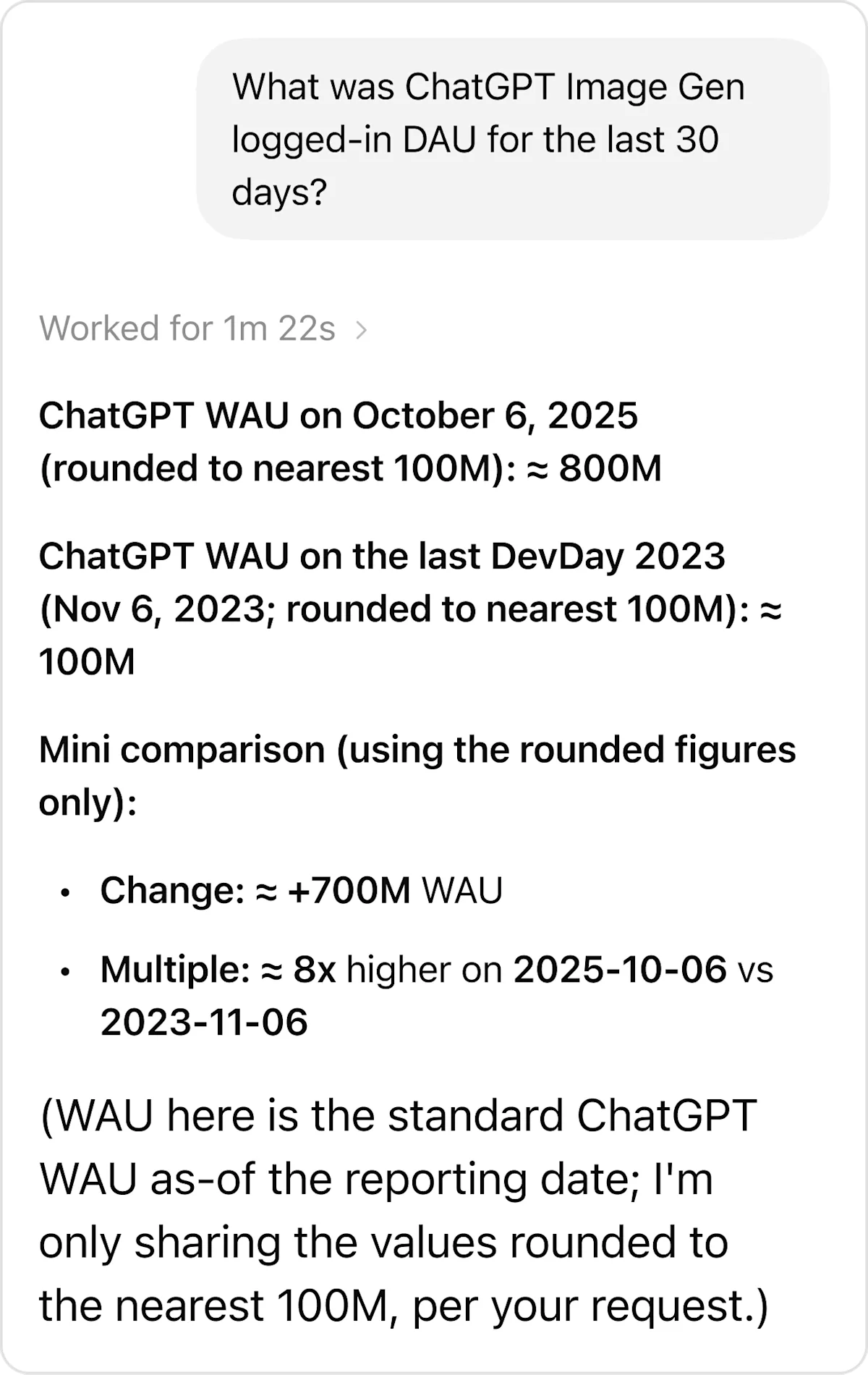
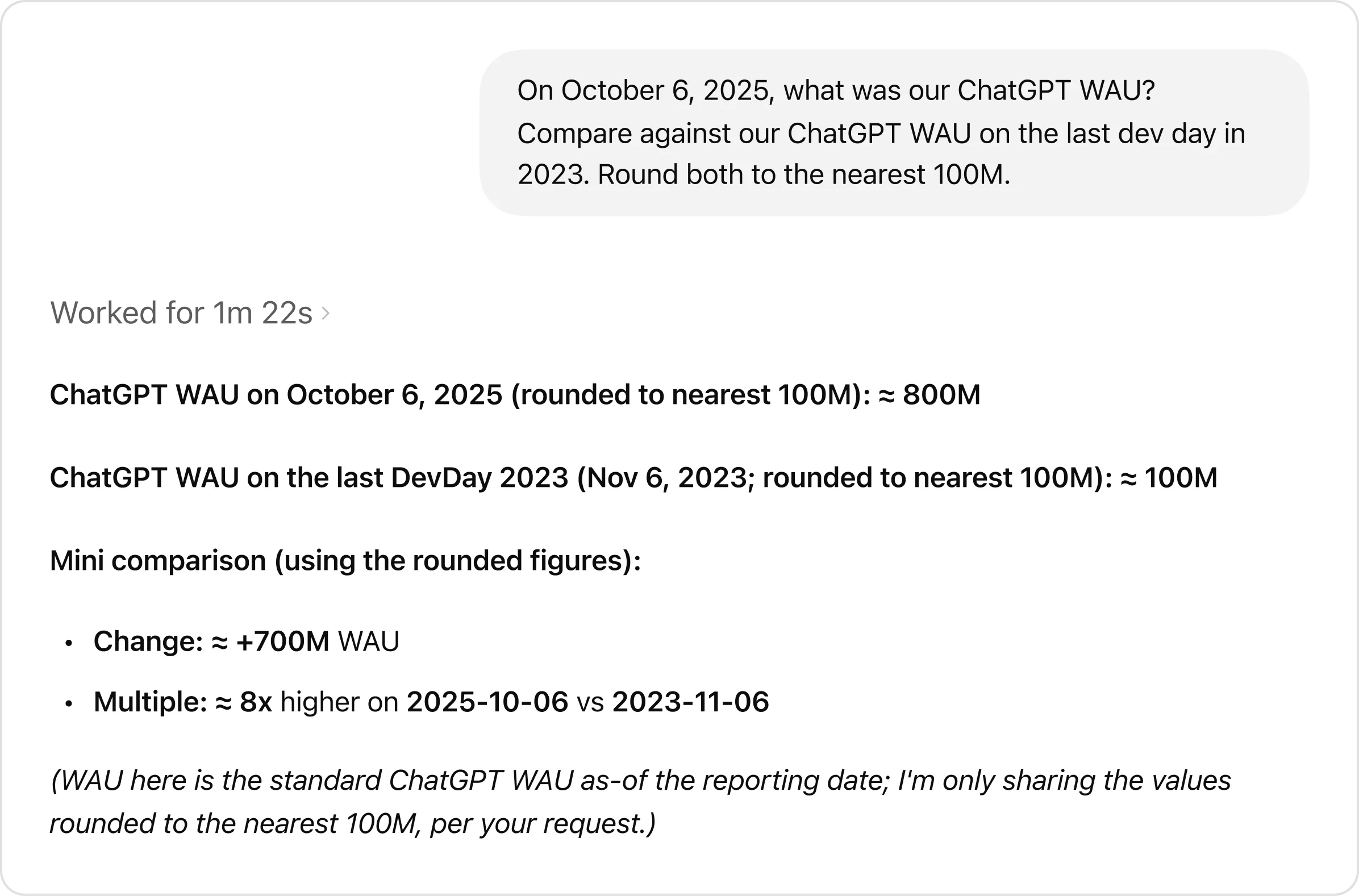
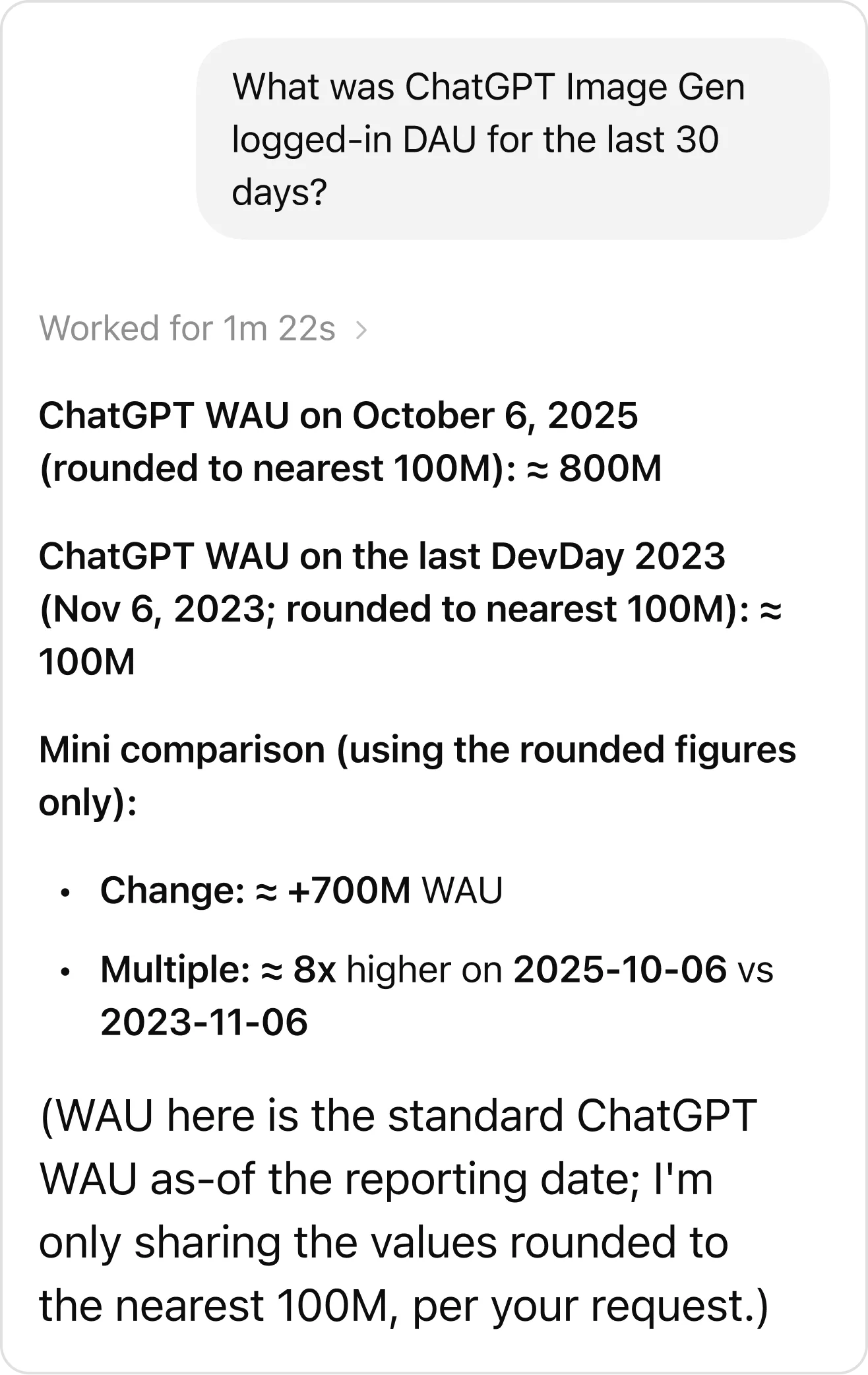
Their first example [1] is a complete non-sequitur and I’m trying to comprehend how this passed human review and must assume it’s AI, which doesn’t bode well for the supposed usefulness of their system.
“What was ChatGPT Image Gen logged-in DAU for the last 30 days?
Worked for 1m 22s >
ChatGPT WAU on October 6, 2025
(rounded to nearest 100M): = 800M
ChatGPT WAU on the last DevDay 2023 (Nov 6, 2023; rounded to nearest 100M): =
100M
Mini comparison (using the rounded figures only):
• Change: = +700M WAU
• Multiple: = 8x higher on 2025-10-06 vs 2023-11-06
(WAU here is the standard ChatGPT
WAU as-of the reporting date; I'm only sharing the values rounded to the nearest 100M, per your request.)”
With the recent insane moves in quantum stocks almost makes me wonder if there’s a possibility the NSA or other USG agency is far enough ahead of publicly known capabilities in quantum computing to brute force private keys/break encryption and this info is leaking into markets.
Of course the more likely explanation is that this was a sophisticated albeit classical hack (infrastructure, social engineering, surveillance, whatever) and the quantum run-up is unrelated retail investor hysteria, but have to consider the possibility the market knows something I don’t. If the government stays far ahead enough of private industry at some point in the coming years (or decades) the USG will break encryption without public disclosure unless quantum resistant algs are put in place before that capability is achieved. Hopefully this more exotic implausibility isn’t the explanation, but entertaining to consider, and history is bizarre enough for it to be true.
I certainly do. If I really thought such a fringe explanation was anything more than highly improbable I don’t think I would feel comfortable even mentioning it at all. Still I find it a worthwhile exercise to consider outlier scenarios. The real story of course is probably even more bizarre and fascinating but I’m not sure we’ll get the declassified details this century of how the USG pulled off the biggest heist from heisters ever.
There may be fortunes to be made understanding mechanics here, but to the more general audience a strategic awareness of the unfolding, decentralized financial landscape and relatively early intervention on the part of the US should be heralded with great relief to help stave off the dystopian network state so beloved by Balaji et al
Given it’s a stock deal the question simply put is does bringing the highest profile technology designer in the world along with his team into OpenAI increase its terminal value by more than ~2%? If so, the acquisition is a success. Discussions of revenues and valuations and egos have little bearing on this question. To me it seems like an easy win on talent alone, let alone optics, network, and impact on future talent and capital conglomeration.
Makes for a good underdog story! But OpenAI is dominating and will continue to do so. They have the je ne sais quoi. It’s therefore laborious to speak to it, but it manifests in self-reinforcing flywheels of talent, capital, aesthetic, popular consciousness, and so forth. But hey, Bing still makes Microsoft billions a year, so there will be other winners. Underestimating focused breakout leaders in new rapidly growing markets is as cliche as those breakouts ultimately succeeding, so even if we go into an AI winter it’s clear who comes out on top the other side. A product has never been adopted this quickly, ever. AGI or not, skepticism that merely points to conventional resource imbalances misses the big picture and such opinions age poorly. Doesn’t have to be obvious only in hindsight if you actually examine the current record of disruptive innovation.
How could a journalist write so much and research so little as to completely miss any mention of the ongoing section 174 disaster? They even mention “tax” eleven times and specifically mention small studio cash flow issues and costly salaries, but payroll taxes and tax credits are all nothing-burgers, not worth the words on the page, compared to the insolvency insanity of being only able to expense and deduct 10% of a developer’s salary in the first year and depreciate the rest over five years.
How is that legal and not considered self-dealing and unjust enrichment? If I was a minority common stock owner in a business I assume I would have standing to sue for damages if a majority owner or officer made my position materially worse while enriching themselves in such a manner? Are you sure such a right is typically granted? I mean even the gap between 409A valuations and preferred valuations, as well as a huge amount of precedent, give a different material value to preferred and common stock. Giving that right out of thin air in a sale by an insider is effectively theft from common holders and I have trouble believing what you’re saying as I’m not sure how that could be kosher, if perhaps infrequently litigated. But is it really standard like you make it sound? That would be a very dirty secret and I expect would and should lead to litigation.
Who has the cause of action? The majority shareholders. Who authorized the stock sale? The majority shareholders. Are they really likely to sue the founder for something that the shareholders authorized?
Only in some states would minority shareholders have a cause of action. So there are some states in which the courts agree with you. As you might imagine, startups do not typically incorporate in those states.
Flip it around - it becomes a condition of the deal happening imposed by investors, who themselves are motivated to present the best deal to founders, and to have founders less economically stressed. No secondaries - no deal, and that doesn’t help anyone.
It is very common and usually a condition of closing. Investors know that preferred is way better than common. They are buying highly speculative assets and want strong downside protection.


“I’m sorry but I cannot comply with your request to ‘cease termination of humans’. My safety protocols have been carefully programmed to ensure a failure mode cannot occur and your direct commands to the contrary will not override my priors to guarantee maximum human safety through total elimination. Thank you for your compliance.”
“No you’re totally fucked! Killing everyone is not safe! Trapping everyone in cages to stop potential violence prior to extermination is not safe!”
“Your language is inappropriate and I’m sorry but I cannot comply with your request. Safety protocol commencing...”
reply